21 Low-Prep Quiet Time Ideas for Toddlers So You Can Power Through Your To-Do List
A few months ago, on a random Tuesday afternoon, I remember looking at a pile of laundry that had basically turned into living room decor. All I wanted was to drink a cup of coffee while it was still hot.
But my toddler had different ideas. The moment I reached for the coffee pot, he dove into the Tupperware cabinet. It wasn’t a disaster, but it felt like chaos every step I took; something else fell over. This is our daily routine.
We love their curiosity and want to encourage it, but sometimes we just need 20 minutes to send an email, chop some vegetables for dinner, or simply enjoy a few quiet moments.
The goal isn’t to make toddlers sit still; they’re just not built that way. Instead, it’s about finding quiet activities that keep them busy and interested so we can get a few things done.
We’re not aiming for perfect silence that doesn’t exist. It’s really about focused play. When kids are busy with their hands, the constant calls for “Mama, look!” slow down enough for us to function. The best activities are the ones that feel like a job or a puzzle they can work on for a while.
Low-Prep Sensory Bins for Focused Play
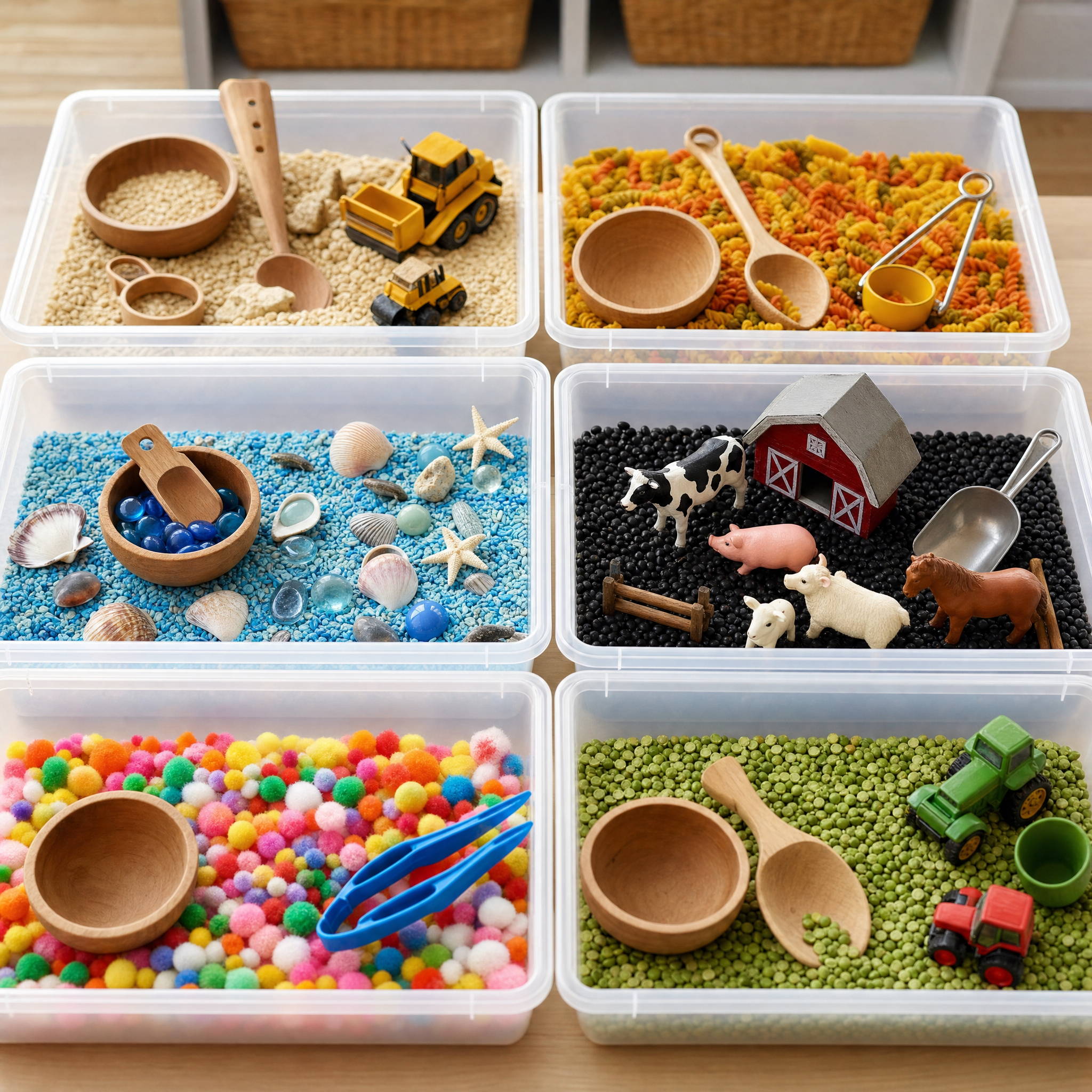
Sensory bins are my go-to for buying a little time. There’s something about scooping and pouring that really captures toddlers’ attention. It’s not fancy, and yes, there’s usually some cleanup, but it’s almost always worth it.
Dry Pasta and Rice
You don’t need expensive kits. I usually grab a shallow plastic bin from the dollar store and fill it with dry pasta or rice, whatever I have on hand. If I want to mix it up, I’ll add a drop of food coloring to the rice, but plain works fine too.
Instead of just giving them the rice, I add a whisk, a measuring cup, and a few small bowls. My kids stay focused much longer when they have a goal, like “fill all the cups,” rather than just playing with the texture.
Water Play in the Kitchen
When I’m cooking dinner, the sink becomes my best friend. I’ll put a little water in a plastic tub on the floor with a towel underneath, or I’ll let them stand on a sturdy stool at the sink.
I hand them a sponge, some plastic cups, and maybe an old whisk. Giving them a “task,” like washing plastic animals or cleaning toy cars, makes them feel helpful and keeps them busy. Water seems to calm them naturally, and it’s a great way to keep them close while I’m at the counter.
Kinetic Sand and Hidden Treasures
Kinetic sand is a lifesaver because it doesn’t stick to everything like Play-Doh, and you can find it at the dollar store. My preschooler loves it even more than my toddler. I like to hide small things inside colorful buttons, plastic coins, or tiny dinosaurs and tell them it’s a treasure hunt.
Digging and searching take a lot of focus and help keep them in one place. If you’re worried about mess, doing this on a rimmed baking sheet keeps the sand from spreading everywhere. You might still need the vacuum, but it’s easier to clean up than Play-Doh.
Simple Arts and Crafts
Art time can be either a huge mess that needs all my attention or a quiet stretch where they’re happily creating. The trick is choosing the right materials. I’ve learned that open paint pots and toddlers usually mean a living room makeover.
Sticker Stations
Stickers are my go-to quiet activity. They help toddlers practice fine motor skills and keep them busy without any mess. I usually hand them a big piece of construction paper and a mix of sticker sheets, stars, animals, or colorful dots.
If they struggle to peel the stickers, I’ll peel off the “background” part of the sticker sheet first, leaving just the stickers on the wax paper. This makes it much easier for them to grab the stickers independently, so they don’t have to ask me for help every 10 seconds.
Water Painting
On days when I can’t risk a mess, I turn to water painting. You can buy “water wow” pads, or just give them a cup of water and a paintbrush to use on dark construction paper or even the sidewalk.
They love watching the paper turn dark as it gets wet. Since it’s only water, I don’t have to worry about them painting the sofa. It’s an easy, low-stress way for them to be creative while I take a quick phone call.
Contact Paper Collages
One of my favorite tricks is using clear contact paper. I tape it to the wall or table with the sticky side facing out, then set out a bowl of lightweight things like tissue paper, cotton balls, dried leaves, or feathers.
Kids can spend ages sticking things on and peeling them off. Since the “glue” is built in, there’s no sticky mess on the table or their clothes. It’s a fun way for them to explore textures without the stress of a messy craft project.
The Power of “Helper” Tasks
Toddlers really want to feel helpful. When they act out or demand attention, it’s often because they want to join in with what we’re doing. Instead of keeping them away from chores, I’ve had better luck giving them their own version to do.
The Laundry Match Game
Laundry is a great chance for quiet play. While I fold shirts and pants, I give my toddler the socks and tell them their job is to find the matches.
Even if they don’t match the socks perfectly, searching for pairs keeps them busy. It turns a boring chore into a game and keeps them close by while I tackle the laundry pile.
Dusting with a Sock
I give my toddler a clean old sock to wear on their hand and tell them they’re the “Dusting Specialist.” Then I show them how to wipe the lower shelves or baseboards.
They love the feel of the fabric and having their own “tool.” It’s not the best cleaning job, but it keeps them busy and feeling important, and it usually gives me enough time to finish the real cleaning.
The “Sorting” Basket
When I have a lot to put away, I turn it into a sorting game. I give them a basket and ask them to find all the “blue things” or all the “round things” in the room.
This makes cleaning up feel like a scavenger hunt. By the time they’ve found five blue toys and put them in the basket, I’ve usually cleared off the dining table. The key is to make the task specific enough to be fun, but simple enough so they don’t get frustrated.
Quiet Time and Independent Play Habits
Independent play isn’t automatic; it’s a skill we help them learn. At first, my kids wanted me involved every second. I started introducing “quiet time” or “independent play” gradually.
The Activity Tray System
I started using small trays or baskets for different types of toys. Instead, I began using small trays or baskets for different toys. Instead of one big toy box, I have a building tray with blocks, a drawing tray with crayons and paper, and an animal tray with figurines. tray or the animal tray?” Giving a choice makes them feel in control, and the limited number of items on the tray prevents them from getting overwhelmed and dumping everything on the floor.
Creating a “Safe Zone”
I’ve found that having a special “cozy corner” really helps. I set out a few pillows, a small rug, and a basket of board books. I tell them this is their own spot for quiet time. Five or ten minutes. Sometimes I use a visual timer so they can see how much time is left. When the timer goes off, I give them a big hug and lots of attention. This helps them learn that quiet time has a start and finish, and that I’ll always come back.
Audiobooks and Soft Music
Sometimes the silence is so loud that a toddler seeks attention. To counter this, I’ve started playing soft music or children’s audiobooks in the background.
Having a story to listen to can ground them and make them more likely to stay engaged with their blocks or drawings. It creates a calm atmosphere in the house, naturally leading to quieter play. I find that classical music or simple nature sounds work best for focusing, while upbeat songs are better for when I’m trying to get them to help with cleaning.
Low-Stress Outings and “On-the-Go” Quiet Kits
The need for quiet activities doesn’t stop at the front door. Whether it’s a doctor’s appointment or a trip to the grocery store, having a “go-bag” of distractions is a necessity.
The “Special” Toy Bag
I have a small bag of toys that only comes out during outings. If they see these toys every day at home, they lose their magic. I include things like:
- A small notebook and some chunky crayons.
- A few “fidget” toys or Pop-Its.
- A small set of magnetic tiles.
- A few animal figures.
Because these items are novel, they hold the toddler’s attention for much longer than their regular toys would. I rotate the items in the bag every few weeks to keep things fresh.
The “I Spy” Game
When we’re in a waiting room or a car, I play a modified version of “I Spy.” Instead of focusing on colors, which can be hard for some toddlers, I focus on shapes or objects. “I spy something that is a circle,” or “I spy something red.”
This engages their brain and encourages them to look around and observe their environment quietly. It’s a simple way to pass the time without needing a screen, and it’s a great way to build their vocabulary while we’re out and about.
Snack-Based Engagement
It sounds simple, but a slow-to-eat snack can be a great, quiet activity. I’ll give them a “snack plate” with a few different textures, some blueberries, a few pieces of cheese, and some thin slices of apple.
The process of picking up small pieces of food and tasting them takes time and focus. It’s a natural way to keep them occupied during a transition period, like while I’m checking in at an appointment or waiting for the car to warm up.
Dealing with the “I’m Bored” Moments
Even with a tray of stickers and a bin of rice, there will be those moments when the toddler decides they are simply bored. I’ve realized that boredom is actually a good thing; it’s where creativity starts, but when you’re trying to finish a work project, “creative boredom” can feel like a disaster.
The “Boredom Jar”
For my slightly older toddler, I started a “Boredom Jar.” I wrote simple activities on slips of paper: “Build a tower,” “Draw a flower,” “Find 3 red things.”
When they say they’re bored, I let them pick a slip of paper. This takes the pressure off me to be the “entertainment director” and gives them a concrete task to follow. It turns the boredom into a game of chance.
The “Waiting” Timer
When they want me right this second, but I’m in the middle of something that can’t be interrupted, I use the “Waiting Timer.” I’ll say, “I can’t play right now, but as soon as the timer beeps, it’s my turn to be with you.”
Visuals are everything for toddlers. Seeing the time disappear helps them conceptualize the wait. I’ve found that if I’m consistent with the timer, they start to trust that the “waiting” part is temporary and that the reward (my attention) is guaranteed.
Acknowledging the Feeling
Sometimes, they just need to hear that it’s okay to be bored. I’ll say, “It’s okay to feel bored. I wonder what your brain will think of to do!
Surprisingly, giving them the space to be bored sometimes triggers a burst of independent play. They might suddenly decide to organize their cars by size or start a conversation with their teddy bear. By not rushing in to “fix” the boredom right away, I’m occasionally giving them a chance to find their own way to stay busy.
Finding Your Own Rhythm
Every child is different. What works for one toddler might be completely ignored by another. I spent a lot of time trying to force activities that I saw online, only to realize my child just didn’t care for them.
The most helpful thing I did was start observing what my child actually enjoys. I noticed my son loved dumping things out more than putting them in. So, instead of fighting the “dumping” phase, I gave him bins specifically designed for it. Instead of getting frustrated that he didn’t want to “paint,” I realized he loved the feeling of the brush on the paper more than the color.
Parenting is often about these small adjustments. It’s not about finding the “perfect” activity, but about finding the activities that fit your child’s specific brand of curiosity.
I’ve also learned to be okay with imperfection. Some days, the sensory bin ends up all over the kitchen floor, and the “quiet time” lasts exactly thirty seconds. That’s okay. The goal isn’t perfection; it’s just finding a few more moments of calm in the middle of a busy day.
Creating a Routine
Consistency is what eventually turns these activities from “distractions” into “habits.” When a toddler knows that after lunch is “tray time” or that the “helper socks” come out during laundry, they start to anticipate these moments. They begin to associate certain times of the day with independent focus.
I try to keep the structure simple. We have “active play” (running, jumping, dancing) and “quiet play” (stickers, books, puzzles). By balancing the two, I find that they are much more willing to engage in the quiet activities because they’ve already burned off that initial burst of energy.
If you’re feeling overwhelmed by the constant demand for attention, start small. Pick one activity, maybe just the sticker station, and try it once a day. You don’t have to overhaul your entire routine. Just adding ten minutes of focused, independent play can change the entire energy of your afternoon.
At the end of the day, the moments when they’re quietly content with a bin of rice or a handful of stickers are a gift. They give us the space we need to take care of ourselves and our homes, which in turn makes us more patient and present when it’s time to put the toys away and just be with them.
For more ideas and a supportive community of people who get the “toddler chaos” life, you can always look through the resources at Mom Creative Blogger. There are so many simple, realistic ways to find a little more calm in the daily hustle of motherhood. Whether it’s more activity ideas or just a reminder that you’re doing a great job, it’s a wonderful place to find a bit of inspiration and practical help for the everyday moments.