

11 Simple Ways to Manage ADHD as a Stay-at-Home Mom
Have you ever walked into the kitchen with a specific mission, maybe to get a glass of water, only to find yourself ten minutes later scrubbing a baseboard with a toothbrush while the laundry is still soaking in the washer and your toddler is trying to eat a crayon in the next room? If that sounds familiar, you aren’t alone. For those of us navigating the world with ADHD, the “mental load” of motherhood isn’t just heavy; it feels like a thousand browser tabs are open in our brains at once, and three of them are playing music we can’t find.
Stay-at-home mom and Adhd

Being a stay-at-home mom (SAHM) is a full-time job, but when you add ADHD into the mix, it can feel like a chaotic marathon with no finish line. The traditional advice we get, “just get a planner” or “try to be more organized,” often falls flat because our brains don’t work in linear paths. We don’t struggle with a lack of will; we struggle with executive function. That means the gap between knowing we need to start the dishwasher and actually doing it can feel like a giant canyon.
The guilt is often the hardest part. We see the “Pinterest-perfect” moms who have meal-prepped organic snacks for the week and a color-coded family calendar, and we wonder why we can’t just “do” it. But here is the truth: your brain is wired differently. Your creativity, your ability to pivot quickly in a crisis, and your deep empathy are superpowers. The trick is finding a way to manage the ADHD side of things so it doesn’t lead to total burnout.
In this guide, we are going to dive deep into 11 practical, low-pressure ways to manage ADHD as a stay-at-home mom. No “perfect” systems, no rigid schedules that make you feel like a failure if you miss a ten-minute window. Just honest, real-life strategies that work with your brain, not against it.
1. Stop Fighting the “Dopamine Chase.”

If you have ADHD, your brain is essentially hunting for dopamine, the chemical that makes us feel rewarded and motivated. This is why “boring” tasks like folding laundry or washing bottles feel physically painful. We aren’t lazy; we are under-stimulated.
The Concept of “Body Doubling”

One of the most effective ways to get things done when you’re stuck is body doubling. This is simply the act of having another person present while you work on a task. They don’t even have to help you; they just have to be there. For many SAHMs, this is hard because we are often alone with the kids.
However, you can modernize this. Hop on a FaceTime call with another mom, or use a website like Focusmate. Even putting on a “Clean With Me” YouTube video in the background can trick your brain into feeling like someone else is working alongside you, which triggers that much-needed focus.
###Gamifying Your Chores
Since your brain craves rewards, turn the mundane into a game. Set a timer for 10 minutes and see if you can beat the clock to clear the living room floor. Or, listen to a high-energy podcast or an audiobook you’re obsessed with only while you do the dishes. By pairing a low-dopamine task (dishes) with a high-dopamine reward (the story), you bypass the mental resistance.
2. Build a “Low-Friction” Home Environment

Executive dysfunction makes “tiny” steps feel like mountains. If you have to move three things to get to the vacuum, you probably won’t vacuum. The secret to managing ADHD at home is reducing the number of steps between you and the completed task. This is called “reducing friction.”
The “Point of Performance” Storage
Stop trying to organize your home the way a “normal” person would. Instead, store things exactly where you use them.
- The Diaper Station: Don’t just have one changing table. Keep a small basket of diapers, wipes, and cream in every room where a diaper change usually happens.
- Cleaning Supplies: Keep a spray bottle and a rag in every bathroom. If you see a smudge on the mirror while brushing your teeth and the cleaner is right there, you’ll actually wipe it. If it’s in the laundry room, you’ll forget it exists by the time you get there.
- Command Centers: Put a hook and a small basket right by the door for keys, bags, and shoes. If it doesn’t have a designated “landing spot,” it will end up on the kitchen counter, and the counter will eventually disappear under a mountain of “stuff.”
Visual Cues Instead of Mental Lists

Out of sight is out of mind. This is a literal reality for ADHD brains. If the laundry is in the machine and the door is closed, it no longer exists.
- Clear Bins: Use clear plastic containers for toys and pantry items. If you can see it, you remember it’s there.
- Open Shelving: Whenever possible, opt for open shelving or baskets without lids.
- Sticky Notes as Signposts: If you have a habit of forgetting to start the coffee maker or take the trash out, put a bright neon sticky note on the machine or the door. It serves as an external “trigger” for your brain.
3. Mastering the “ADHD-Friendly” Schedule

Standard planners are often the graveyard of ADHD hopes. We buy them with such enthusiasm in January, only to stop using them by February 12th because we missed two days, and now the whole book feels “ruined.” Stop trying to follow a rigid hourly schedule; it’s a recipe for shame.
The “Rhythm” vs. The “Schedule”
Instead of saying “At 8:00 AM we eat breakfast,” try a “rhythm.” A rhythm is a sequence of events.
Morning Rhythm:* Wake up $\rightarrow$ Coffee $\rightarrow$ Kids’ Breakfast $\rightarrow$ Get Dressed.
It doesn’t matter if this happens at 7:00 AM or 9:00 AM. As long as the sequence remains, you have a sense of predictability without the pressure of the clock.
The “Brain Dump” Method
When the mental noise gets too loud, your “working memory” overflows, leading to that feeling of panic where you don’t know where to start. Take a piece of paper, just one, and write down every single thing on your mind.
- “Buy milk.”
- “Call the pediatrician.”
- “The living room is a mess.”
- “I feel like a bad mom.”
- “Need to find a birthday gift for nephew.”
Once it’s all on paper, you can pick three things. Just three. Everything else is for “future you.” This clears the mental cache and allows you to focus on the immediate present.
Time Blocking for “Hyperfocus”
ADHD isn’t just about a lack of focus; it’s often about too much focus on the wrong thing. If you get into a “flow state” while organizing a craft closet, you might forget to make lunch. Use alarms on your phone (with labels, like “LUNCH TIME”) to pull yourself out of the hyperfocus hole and back into the day.
4. Managing Sensory Overload and the “Mom Meltdown.”

Many moms with ADHD also struggle with sensory processing. The sound of a screaming toddler, the feeling of sticky fingers on your clothes, and the visual clutter of a messy room can all hit at once, leading to a sensory “crash” or a meltdown.
Identifying Your Triggers
Notice when you feel the most overwhelmed. Is it the “witching hour” (5 PM to 7 PM)? Is it the loud noise of the vacuum? Once you identify the trigger, you can create a buffer.
- Loop Earplugs or Noise-Canceling Headphones: You can still hear your children, but the “edge” is taken off the noise. This prevents your nervous system from going into fight-or-flight mode.
- The “Quiet Corner”: Create a small space in your home that is a “no-clutter zone.” Even if it’s just one chair or a corner of the bedroom. When the world feels too loud, spending two minutes there can reset your brain.
The 5-Minute “Sensory Reset.”
When you feel a meltdown coming on, try a quick sensory shift:
- Cold Water: Splash ice-cold water on your face or hold an ice cube. The temperature shock can snap your brain out of a spiral.
- Weighted Pressure: A heavy blanket or a firm hug from a partner (if available) can provide proprioceptive input that calms the ADHD brain.
- Movement: Shake your arms and legs. Jump up and down. ADHD brains often need physical movement to process emotional intensity.
5. Compassionate Parenting and ADHD
One of the hardest parts of being a mom with ADHD is the fear that your lack of organization will negatively impact your children. You might worry that your “chaos” is creating an unstable environment. But here is a secret: your ADHD can actually be an asset in parenting if you lean into it.
Leading by Example (The “Oops” Method)
Instead of trying to be the “perfectly put-together” mom, show your kids how to handle mistakes.
- Narrate Your Process: “Mommy forgot where she put her keys! I’m feeling a bit frustrated, so I’m going to take a deep breath and look in the three most likely places.”
This teaches your children emotional regulation and problem-solving. You are showing them that it’s okay to struggle and that there are ways to fix it.
Embracing Spontaneity

While kids need routine, they also love the magic of the unexpected. Your ADHD brain is likely great at “improv.” That sudden impulse to have a living room picnic or a middle-of-the-day dance party? That’s your ADHD gift. These moments of joy often outweigh the fact that the laundry isn’t folded.
Positive Discipline and the ADHD Brain
Because your brain understands impulsivity, you are uniquely positioned to be patient with a child who is also struggling with self-control. Use positive reinforcement. Instead of “Stop running!”, try “Please use your walking feet.” Your ability to empathize with the “struggle to stop” makes you a more compassionate parent.
6. Feeding the Brain: Nutrition and ADHD
We’ve all heard that sugar makes kids hyper, but for moms with ADHD, nutrition is more about stability. Our brains are often desperate for proteins and omega-3s, and when we forget to eat (which happens often), our ADHD symptoms skyrocket.
The “Low-Effort” Snack Station

If you have to prep a meal, you might not do it. Create a “grazing station” for yourself.
- Pre-cut Veggies: Buy the pre-cut ones. Yes, they are more expensive, but the “ADHD tax” is the price you pay for the convenience that ensures you actually eat.
- Protein-Heavy Snacks: Keep almonds, Greek yogurt, or hard-boiled eggs accessible. Protein helps with the production of neurotransmitters that manage focus.
- Hydration Reminders: Dehydration mimics brain fog. Keep a giant water bottle with a straw (straws make it easier to drink more) wherever you spend the most time.
Simple Meal Planning for the Disorganized

Forget the 30-day meal plan. Try “Theme Nights.”
- Monday: Tacos
- Tuesday: Pasta
- Wednesday: Breakfast for Dinner
- Thursday: Sandwiches
- Friday: Pizza
This removes the “decision fatigue” of wondering what to cook. You only have to decide which taco or which pasta, rather than staring at a blank fridge and feeling paralyzed.
7. Prioritizing Maternal Mental Health and “The Burnout Wall.”

Mom burnout is a real, physiological state. When you have ADHD, you are spending twice as much energy as a neurotypical person just to stay “on track.” This means you hit the wall much faster.
Recognizing the Signs of ADHD Burnout
It’s not just being tired. ADHD burnout often looks like:
- Analysis Paralysis: You stand in the middle of the room and literally cannot decide which task to do first, so you do nothing.
- Increased Irritability: Things that usually wouldn’t bother you (like a spilled glass of milk) suddenly feel like a catastrophe.
- Total Executive Collapse: You stop doing things you usually manage, like remembering to brush your teeth or check the mail.
The “Good Enough” Standard
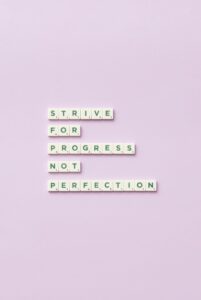
Perfectionism is the enemy of the ADHD mom. The “all or nothing” mentality tells us that if we can’t do the chores perfectly, there’s no point in doing them.
Challenge this by embracing the “C- Minus” effort.
- Need to clean the kitchen? Just clear the counter. That’s a win.
- Need to fold laundry? Just put the socks in a basket and leave the shirts unfolded. That’s a win.
Doing something poorly is always better than doing nothing at all while feeling guilty about it.
Finding Community at Mom Creative Blogger
This is where we really focus on the intersection of motherhood and mental health. At Mom Creative Blogger, we talk openly about the things that usually stay hidden, like the struggle with burnout, the reality of managing ADHD, and the feeling of being “lost” in the role of motherhood. You don’t have to do this in isolation. Knowing that another mom is also struggling with her “mental browser tabs” is the first step toward healing.
8. Practical Tools and Tech to Save the Day

Sometimes, the best way to manage ADHD is to outsource the remembering to a machine. Your phone is not just a distraction; it’s a prosthetic frontal lobe.
The Power of Voice-to-Text
Typing takes time and effort. Use your voice assistant (Siri, Alexa, Google).
- “Alexa, remind me to put the laundry in the dryer in 30 minutes.”
- “Siri, add milk to the shopping list.”
Do this the second the thought enters your head. If you wait thirty seconds, the thought is gone.
Visual Timers
Standard clocks are abstract. A visual timer (like a Time Timer or a digital countdown) shows a red disk that disappears as time goes by. This helps you “see” time passing and prevents the “time blindness” that makes you think a task will take 5 minutes when it actually takes 45.
App Recommendations
- Trello or Notion: For those who like visual boards to organize their thoughts.
- Any Do or To-do list: For simple, checklist-style reminders.
- Whiteboard Walls: Some of us need a giant physical space to scribble. A large whiteboard in the kitchen can serve as a shared family brain.
9. The Art of “Productive Procrastination.”
Since the ADHD brain often struggles to start a high-priority task, you can use “productive procrastination” to your advantage. This is when you avoid the big,g scary task by doing several smaller, useful tasks.
Creating a “Dopamine Menu”
When you’re feeling bored or under-stimulated, you usually scroll through social media. This is “junk food” dopamine. Instead, create a “Dopamine Menu” of activities that actually nourish you:
- Appetizers (5 mins): A quick stretch, a piece of dark chocolate, and petting the dog.
- Main Course (30-60 mins): A walk outside, a craft project, or reading a chapter of a book.
- Desserts (Comfort): A warm bath, a call with a best friend, a favorite movie.
When you feel the urge to distract yourself, pick something from the menu.
Working With Your Energy Peaks
Notice when your brain is most “awake.” For some ADHD moms, it’s 6:00 AM before the kids wake up. For others, it’s 10:00 PM after the house is quiet. Don’t try to force yourself to be productive during your “low” times. Use your peak energy for the hardest tasks and your low energy for “low-friction” tasks like folding towels or sorting mail.
10. Setting Boundaries for Your Sanity
The “Stay-at-Home” part of SAHM often means you are on call 24/7. For an ADHD brain, this constant demand for attention is exhausting. You need “brain breaks” to recover.
The “Mommy Timeout”
It is okay to tell your children, “Mommy’s brain is feeling very loud right now, and I need 10 minutes of quiet so I can be a better helper.” Set a visual timer. Give them a “special quiet toy” (like a sticker book or a specific toy they only get during your break). This models a healthy way to handle overstimulation.
Managing the “Invisible Load”
Often, the partner of an ADHD mom takes on the “organizer” role, which can lead to resentment on both sides. Communicate clearly. Instead of “I’ll handle the house,” agree on specific domains. Maybe you handle the “creative and fun” stuff (crafts, outings, storytelling) while they handle the “linear” stuff (bills, scheduling appointments). When you play to your strengths, the tension disappears.
Learning to Say “No” to Extra
Between the PTA, the neighborhood playgroups, and the family expectations, it’s easy to overcommit. Because ADHD often comes with “people-pleasing” tendencies, we say yes to everything in a burst of excitement, only to crash when it’s time to actually do it. Implement a “24-hour rule”: Never say yes to an invitation or commitment on the spot. Say, “Let me check my calendar and get back to you tomorrow.” This gives your brain time to move from the “excitement” phase to the “reality” phase.
11. Forgiving Yourself for the “Messy Middle.”

The most important way to manage ADHD as a mom is to change the way you talk to yourself. The shame cycle is the biggest productivity killer.
Shame:* “I can’t believe the kitchen is still dirty. I’m a failure of a mom.”
Result: The shame causes a dopamine drop, making you feel paralyzed, so you still* don’t clean the kitchen.
The Power of “And”
Start using the word “and” to balance your reality.
- “My house is messy right now, and my children feel loved and safe.”
- “I forgot the library books today, and I am still a capable parent.”
- “I struggled to get out of bed today, and I am going to try again this afternoon.”
Celebrating “Non-Linear” Wins

Stop measuring your success by how much you check off a list. Start measuring it by the quality of the moments. Did you have a great laugh with your toddler? Did you notice the way the light hit the trees during a walk? These are wins. Your children will not remember if the baseboards were dusty in 2026; they will remember that you were the mom who was imaginative, spontaneous, and deeply understanding of their own struggles.
*
A Quick Checklist for Your “ADHD-Mom” Toolkit

If you’re feeling overwhelmed right now, don’t try to do everything on this list. Just pick one thing from this checklist to try today:
- [ ] The “One-Item” Clear: Pick one surface (like the coffee table) and clear just that one spot.
- [ ] The 10-Minute Timer: Set a timer for 10 minutes of “burst cleaning” and stop the moment it beeps.
- [ ] The Sensory Reset: Splash ice-cold water on your face to break a mood spiral.
- [ ] The Brain Dump: Write every single worry onto a piece of paper, then rip up the ones you can’t control.
- [ ] The Protein Hit: Eat a handful of nuts or a piece of cheese to fuel your brain.
Managing ADHD at Home
It’s easy to fall into the trap of “trying too hard.” Here are a few common pitfalls to avoid:
1. Buying a New System Every Time the Old One Fails
We’ve all been there, buying a new planner, a new set of bins, or a new app because we think this is the thing that will finally “fix” us. The problem isn’t the system; it’s that we try to force our brains into a neurotypical box. Instead of a new system, try an adjustment to your current one.
2. Comparing Your “Behind-the-Scenes” to Someone Else’s “Highlight Reel.”
Social media is a lie. That mom with the perfectly organized pantry probably has a closet full of laundry she’s avoiding. When you compare your internal chaos to someone else’s edited photo, you’re fighting a battle you can’t win.
3. Waiting Until You “Feel” Like Doing the Task
The ADHD brain doesn’t work on “feeling like it.” If you wait for motivation to strike, you’ll be waiting forever. Instead, rely on triggers. Use the timers, the body doubling, and the external reminders mentioned above. Focus on the start, not the finish.
You Are Doing Better Than You Think

If you made it to the end of this article, it means you are actively looking for ways to be a better version of yourself for your kids. That alone is a sign of a dedicated, loving mother.
Managing ADHD as a stay-at-home mom isn’t about deleting the ADHD from your brain, and that’s impossible. It’s about building a life that fits around your ADHD. It’s about choosing a “rhythm” over a “schedule” and a “C-minus” effort over a “zero” effort.
The world needs moms who are creative, spontaneous, and empathetic. Your ADHD is the source of many of those strengths. While the laundry might always be a bit of a struggle and the keys might go missing once a week, the love and energy you bring into your home are irreplaceable.
If you’re feeling overwhelmed and just need a place where you can be honest about the chaos, come join us at Mom Creative Blogger. Whether you need a practical printable to help organize your day or just a reminder that you aren’t the only one fighting the “dopamine chase,” we’re here for you. You don’t have to do this alone, and you certainly don’t have to be perfect.
Ready to start your journey toward a calmer, more ADHD-friendly home? Pick one tip from this list and try it today. Just one. You’ve got this.











One Comment