
Stop the Mental Load: 10 Ways to Organize a Chaos-Free Home
You know that feeling? It’s 7 p.m., the kids are finally down, and you’re staring at the kitchen counter piled with mail, lunchbox remnants, and that one rogue sock. Your brain’s buzzing with tomorrow’s to-dos: pack snacks, sign the permission slip, remember the dentist appointment. It’s exhausting. That’s the mental load talking the invisible weight of remembering every little thing to keep the household running. As a mom who’s been there (multiple times, with a side of toddler chaos and school runs), I get it. Organizing a chaos-free home isn’t about perfection; it’s about lightening that load so you can breathe.

I’ve spent years tweaking our home setup while juggling motherhood, a touch of ADHD, and the daily grind. What worked? Simple systems that stick. In this post, we’ll walk through 10 practical ways to organize a chaos-free home and stop the mental load in its tracks. These aren’t pie-in-the-sky ideas. They’re real steps I’ve tested with my own family, messy kitchen tables and all. By the end, you’ll have checklists, examples, and even a few printables from Mom Creative Blogger to get started right away. Let’s dive in and reclaim your headspace.
The Mental Load: Why Does It Hit Moms Hardest?

Before we jump into fixes, let’s name it. The mental load is that constant hum of planning, anticipating, and tracking household stuff. It’s not just doing the tasks; it’s remembering them. Studies from places like the American Psychological Association show women, especially moms, carry about 70% more of this cognitive burden than partners. Add kids to the mix, and it multiplies.
For me, it peaked during a rough winter patch. Kids home from school, toys everywhere, endless “Mom, where’s my…?” questions. I felt like a human Rolodex on overload. Organizing a chaos-free home starts with recognizing this. It frees up mental energy for what matters, like playing with Legos without resenting the cleanup later.

Reducing the mental load means systems that run on autopilot. Not spotless Pinterest boards, but functional spaces where clutter doesn’t trigger panic. Ready for the 10 ways? Each one includes steps, real-life examples, and pitfalls I’ve dodged (or tripped over).
1. Start with a One-Week Declutter Sprint

Decluttering is step zero for any chaos-free home. You can’t organize what you don’t have. But don’t try to Marie Kondo the whole house at once, that’s a recipe for burnout.
Instead, do a one-week sprint. Pick one category per day: clothes, kitchen gadgets, toys, papers. I did this last January, post-holidays, when our living room looked like a tornado had hit.
Here’s how it works:
- Day 1: Clothes. Empty every drawer and closet. Ask: Have I worn it in a year? Fits comfortably now? Donate or trash the rest.
- Day 2: Kitchen. Ditch duplicate utensils and expired spices. Keep only what you use weekly.
- And so on, up to Day 7: Random junk drawers.
In my house, we ditched 15 stuffed animals nobody played with. Result? Kids actually use the toy bins now, cutting “Where’s my dinosaur?” meltdowns by half.
Quick checklist:
- Three bags: Keep, Donate, Trash.
- Set a 30-minute timer per room to keep momentum without overwhelm.
- Involve kids: They pick favorites, learn value.
Pro tip: Snap before-and-after photos. It’s motivating. This alone slashed my mental load by 20%, no more hunting for matching socks in a pile.
2. Zone Your Home Like a Pro

Ever walk into a room and forget why? Zoning divides spaces by function. Kitchen: Food prep/eating. No toys here. Playroom: Kid Central.
This organizes a chaos-free home by making “put away” intuitive. My kitchen zones: Counter zone (daily use only), pantry (bulk), fridge drawers by category (veggies, dairy).
Set up zones in three steps:

- If you’re a visual like me, map your space. Sketch rooms on paper.
- Assign purposes: Entryway for shoes/backpacks, bedroom nightstands for personal items only.
- Label shelves/bins clearly.
Example: Our entryway was a shoe apocalypse. Now? Low rack for kids’ shoes, hooks for coats, a basket for “out the door” items like keys/library books. No more “Mom, I can’t find my sneakers!” at rush hour.
For busy moms, zones reduce decision fatigue. A study in the Journal of Environmental Psychology found zoned homes cut retrieval time by 40%.
Kid-Friendly Zoning Tweaks
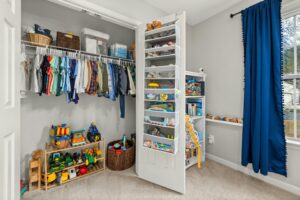
- Toy zones with open bins, easy access, and easy cleanup.
- Homework station: One table corner with a supplies drawer.
- Common mistake: Over-zoning tiny apartments. Start small, like one “mom zone” drawer for your stuff.
Mom Creative Blogger has a free home zoning printable to map yours.
3. Build a Family Command Center
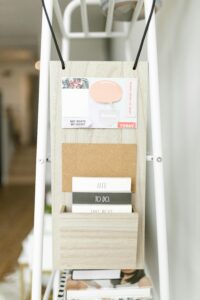
Papers everywhere? Lost invitations? Command center to the rescue. It’s one spot for calendars, lists, and mail, centralizing the mental load.
I mounted ours in the kitchen: Corkboard for invites, whiteboard calendar, slots for mail/to-dos.
Step-by-step setup:
- Pick a wall spot near high traffic.
- Install: Calendar, hooks for keys, file sorter.
- Rules: Check it morning/evening.
Real scenario: Soccer signup vanished last season. Now, everything funnels here. Family meeting Sundays: We review the week.
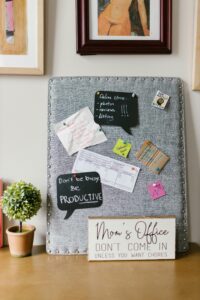
Table: Command Center Essentials
| Item | Purpose | Kid Hack |
|——|———|———-|
| Dry-erase calendar | Schedules | Color-code: Blue=school, Red=sports |
| Inbox trays | Mail/In/out | “Family chores” tray for kids |
| Magnet clips | Notes/photos | Kid chore charts |
This cut my “what day is it?” stress hugely. For ADHD moms like me, visual cues are gold.
4. Master Meal Planning and Prep

Meals are a huge mental load eater. No more 5 p.m. “What’s for dinner?” panic.
Plan weekly. I batch Sundays: List meals, shop once.
10-minute planning template:
- Monday-Friday: Quick meals (tacos, stir-fry).
- Weekends: Fun stuff.
- Staples check: Always have pasta, eggs.
Example: Pre-COVID lockdown, we ate out too much. Now, freezer bags of prepped chicken mean 20-minute dinners. Kids help chop veggies, and teach too.
Batch Cooking for a Chaos-Free Home
- Chop veggies on Sunday, store in Pyrex.
- Double recipes, freeze half.
- Grocery app lists prevent extras.
One reader emailed: “Your meal prep tips saved my sanity during the newborn phase.” Printables at Mom Creative Blogger include a weekly meal planner.
Stats: Families who meal plan waste 30% less food, per the USDA.
5. Revolutionize Laundry with a Sorted System


Laundry mountains? Sort at drop-off. Baskets: Whites, Darks, Delicates, Towels.
My setup: A hamper in each room feeds to the laundry sort station.
Daily flow:
- Evening: Sort kids’ clothes into bins.
- One load morning, one evening.
- Fold while watching Netflix, make it mindless.
True story: Twin laundry overload pre-system. Now, color-coded bins mean kids self-sort by age 5.
Checklist for Laundry Zones

- Pre-sort hampers (4-5 types).
- Folding station: Table with “put-away” basket.
- No “misc” pile, everything categorized.
This frees brain space. No “did I start a load?” loops.
6. Tame Toys with Rotate-and-Donate Rules
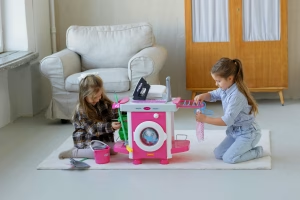
Toys multiply like rabbits. Rotate: 10-15 out at a time, swap monthly.
Donate rule: Birthday influx? Equal out equals in.
Toy organization steps:
- Sort: Keep (played with recently), Donate, Trash broken.
- Bins by type: Blocks, Dolls, Cars.
- 15-minute nightly cleanup timer.
In our house, this ended “nothing to play with” complaints. Playroom now chaos-free-ish.
Indoor Activity Tie-In
Winter blahs? Organized toys mean easy indoor activities like block towers. No digging through a mess.
Kids feel ownership, mental load shifts to them.
7. Digitize Papers and Go Paperless Where Possible

Bills, school papers scan ’em. Apps like Evernote or Google Drive folders: School, Health, Bills.
Weekly purge: Shred junk.
Setup:
- Scanner app on phone.
- Folders: Tax year, Medical.
- School portal apps for newsletters.
Pre-digital, our drawer overflowed. Now? One binder for keepers.
Edge cases: Art projects, photo, and trash. Saves space, keeps memories.
Huge for mental load: Search “vaccination record” vs. rummage.
8. Label Everything (Yes, Everything)

Labels = visual reminders. Use washi tape and printable labels.
Kitchen jars, pantry shelves, kid drawers.
DIY labeling:
- Inventory room.
- Print labels
- Apply.
Example: Labeled spice rack ended “Where’s cumin?” hunts.
For kids: “Folded clothes here.” Self-explanatory.
Studies show labels improve compliance by 25% in households.
9. Delegate with Age-Appropriate Chores

Solo load? Nope. Assign chores by age.
3-year-old: Set the table. 7-year-old: Empty dishwasher.
Chore chart template:
| Age | Chores |
|—–|——–|
| 2-4 | Put toys away, water plants |
| 5-7 | Make bed, sort laundry |
| 8+ | Vacuum, meal help |
Family buy-in meeting: Tradeable points for privileges.
My kids now handle breakfast cleanup. Mental load lightened, I supervise less.
H3: Positive Discipline Link
Ties to positive child discipline rewards build habits.
10. Schedule Weekly Reset and Self-Care Slots
Maintenance: Sunday, 30-minute reset per room.
Plus, block “you” time, no chores.
Reset routine:
- Wipe surfaces.
- Quick declutter.
- Plan next week.
Self-care: 20 minutes of reading, no interruptions.
For me, this prevents buildup. Mom burnout fades when the home’s managed.
Worked example: Last month, reset caught a toy creep early.
Mistakes That Keep the Mental Load Heavy
Even good systems fail with these traps.
- Buy organizers first. Declutter before empty bins fill fast.
- No family training. Introduce one change weekly.
- Perfection chase. Done beats perfect. A sock out? No biggie.
- Ignoring maintenance. Weekly resets or chaos returns.
- Overloading systems. Simple > complex.
One mom shared: “Labeled everything, but didn’t declutter—worse mess.” Learn from it.
Your Path to a Lighter Load
There you have it, 10 ways to organize a chaos-free home and ditch the mental load. From decluttering sprints to family chore charts, these steps have transformed my days. Yours can too.
Start small: Pick two ways this week. Track how your brain feels freer.
Mom Creative Blogger’s here for you. Sign up for our newsletter for more printables, tips on mom burnout, indoor activities, and real-talk support. You’ve got this, friend. Drop a comment: Which tip first?