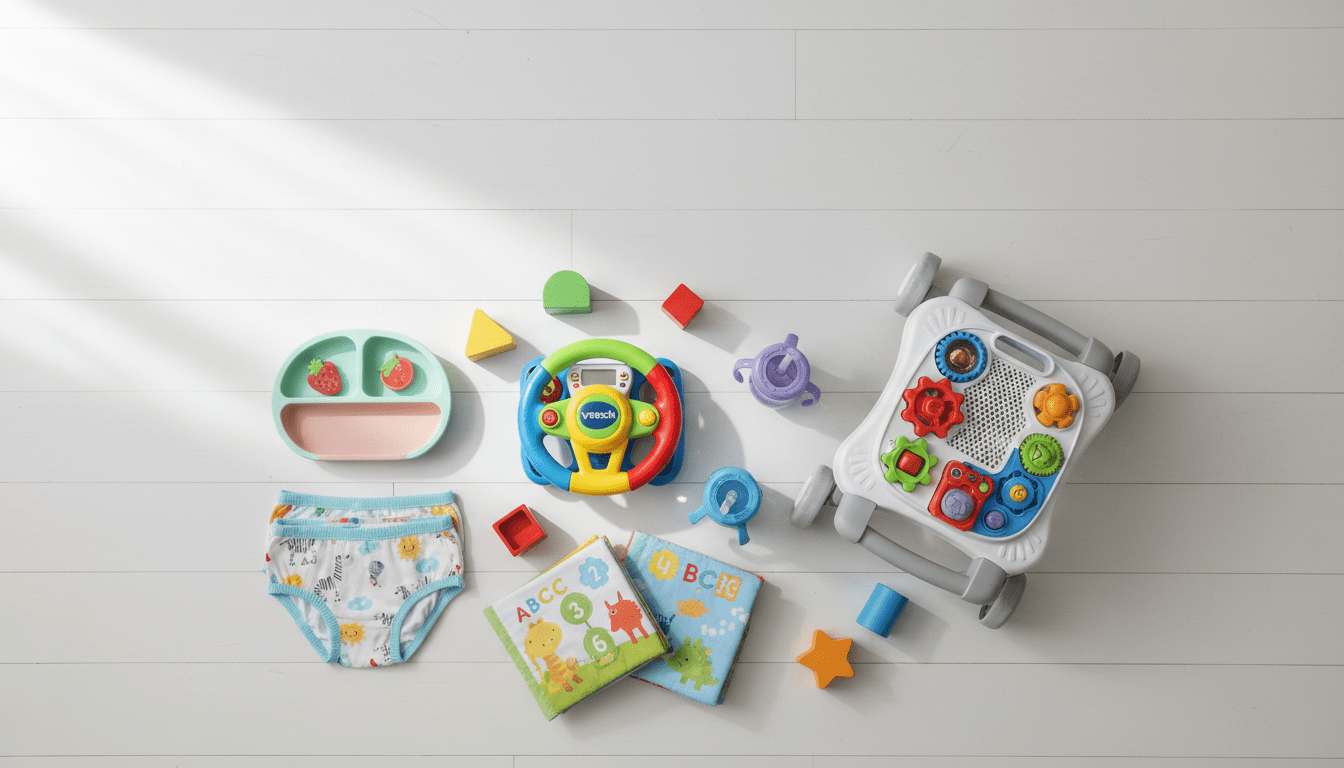

7 Gentle Discipline Techniques for Toddlers
Last year, I was reading a book about discipline, and it made me question the way I reacted to my child’s big emotions.
Not because I was a bad mom. Not because my child was “bad” either. But there were moments where I felt completely stuck.
You know those moments when your toddler screams, refuses to listen, throws themselves on the floor, or reacts so strongly over something that looked small to you? Your body gets tense. You feel embarrassed. You wonder if you are being too soft, too strict, or just doing everything wrong.
It is exhausting, especially when you are already tired and trying so hard to stay calm. Some days, it can really make you feel like you are failing, even when you are actually trying your best.
Gentle discipline is everywhere now. You see it on social media, you hear parents talk about it, and sometimes older generations look at it as if it means letting children do whatever they want.
I understand the confusion, honestly. Even as a mom, I had to learn the difference between being gentle and being permissive.

Gentle discipline is not about letting everything slide. It is about teaching instead of only punishing.
It means helping a little human handle big emotions while you are also trying not to lose your own patience in the process.
Read Next: And if you are trying to parent gently but still feel emotionally drained some days, this article may help too:
How to Recover From Mom Burnout Without Feeling Guilty
If you’re reading this, you probably want something that works in real life, not just in a perfect Instagram photo. You want strategies that survive the 5 PM witching hour, the public meltdown, and the days when you’re running on three hours of sleep. So this is not about becoming a perfect calm mom overnight. I don’t believe in that. This is about simple techniques that can help when your child is overwhelmed, and you are close to losing your patience, too.
What Gentle Discipline Really Means (And What It Isn’t)

Before talking about techniques, I think we need to be honest about something: gentle discipline is often misunderstood.
Some people hear “gentle” and immediately think “no rules.” But that is not what it means.
Gentle discipline does not mean your child gets to run the house. It does not mean ignoring hitting, screaming. Sometimes it would feel easier to just send them away and be done with it. I understand that feeling. But gentle discipline asks us to stay connected enough to teach, even when we still need to be firm.
It means you still hold the boundary, but you try not to shame or scare your child while doing it.
In fact, gentle discipline often requires more engagement from you than traditional punishment does.

Punishment is about making a child pay for a mistake. Discipline is about teaching them what to do differently next time.
When a toddler hits, the behaviour still needs to stop immediately. Gentle discipline does not mean letting it happen.
But after stopping the behaviour, we also have to teach what to do with anger. Because just saying “stop” does not always give a child a better tool.
Gentle discipline asks you to help them figure out the anger part while still holding the line on hitting.

Another myth is that gentle parents are always calm. I don’t believe that. We are human. We get tired. We get overstimulated. We sometimes react in ways we regret.
Some of us are dealing with burnout, anxiety, ADHD, lack of sleep, or simply too much on our shoulders. There are days when I have not reacted perfectly either.
The point is not to become a flawless mother. The point is to repair, apologize when needed, and keep trying.
It’s also worth noting that this approach takes time. You won’t see results overnight. Toddlers are developmentally stuck in the moment. Their brains aren’t built for impulse control yet.Their brains are still learning how to pause, think, wait, and control impulses. That is why a toddler can know the rule and still struggle to follow it when emotions take over. When you use gentle discipline techniques, you’re basically lending them your calm brain until they can build their own.

So, if you’re expecting a magic switch that stops tantrums immediately, you might be disappointed. But if you’re looking for a way to build a relationship where your child actually listens because they trust you, not because they fear you, this is the path. It shifts the dynamic from power struggles to cooperation. And honestly, that makes life easier in the long run, even if it feels harder in the moment.
Technique 1: Connection Before Correction

This is the part that changed the way I saw toddler behaviour the most. When my child feels disconnected, I notice that everything becomes harder. He resists more, listens less, and I end up repeating myself until I feel drained. You could have the best script, the perfect consequence, and the right tone, but if the connection isn’t there, it’s just noise to them.
I started noticing that difficult behaviour often had something underneath it. Hunger. Tiredness. Too much noise. A transition he did not want. Or simply needing my attention after I had been distracted. Maybe they’re hungry, tired, or overwhelmed. Maybe they just need to know you’re still on their team. If you jump straight to correcting the behavior without addressing the need, you’re fighting an uphill battle.
How to Put This Into Practice

For example, if my child throws toys, my first reaction might be to say, “Stop throwing that right now.” And honestly, sometimes I understand why parents react like that. You’re tired, the noise is too much, and you just want it to stop. That’s a correction without connection. Instead, try getting down to their level first. Make eye contact. Put a hand on their shoulder.
You might say, “You’re upset. I’m here. I won’t let you throw toys, but I’m here.”
Wait for them to settle slightly. Then address the behavior. “Toys are for playing, not throwing. If you throw, I have to put them away.”
See the difference? The first part validates their emotion. The second part sets the boundary.
I’ve tried this during some rough mornings. I remember a period where mornings felt heavy before they even started. My child would wake up upset, and my instinct was to move faster: breakfast, clothes, shoes, hurry, hurry, hurry. But the more I rushed, the worse everything became.
Finally, I stopped. I sat on the floor with him for five minutes before even talking about getting dressed. We just looked at a book. The crying stopped. The rest of the morning went more smoothly. I realized the problem was not always the clothes or the shoes. Sometimes, he needed a connection before cooperation.
Scripts You Can Use Today

Sometimes knowing what to say helps when your brain freezes. Here are a few phrases that prioritize connection:
- “I can see you’re upset.”
- “It’s okay to be mad, but it’s not okay to hit.”
- “I’m right here with you.”
- “Let’s take a breath together.”
- “You wish you could stay at the park longer. It’s hard to leave.”
These phrases only work if your body language matches them. A child can feel when we are saying calm words, but our whole body is tense. If you say “I see you’re upset” while scrolling on your phone, they’ll know. You have to stop what you’re doing. It takes extra time upfront, but it saves time later because you spend less energy fighting resistance.
Technique 2: Boundaries with Empathy

Boundaries are not the opposite of love. They are part of love. Toddlers may fight limits, but they also need to feel that someone steady is holding the line. It feels scary for a toddler to have no limits. They’re testing to see if you’re strong enough to hold the line. The hard part is staying firm without becoming harsh.
Empathy means acknowledging their feelings about the boundary. It doesn’t mean changing the boundary.
The “No” That Doesn’t Start a War

Many of us grew up with discipline that did not leave much room for emotions. The adult decided, the child obeyed, and that was it.
But I think we can hold authority without humiliating our children.
Imagine your child wants a cookie before dinner.
Old way: “No. Go play.”
Gentle way: “I know you want the cookie. It does look good. We are eating dinner first, and then you can have one.”
You aren’t arguing. You aren’t yelling. You’re stating the rule and acknowledging their desire. They might still cry. That’s fine.

Consistency Is Key
This is the part I personally find hard. Sometimes you set a boundary, but then you are exhausted, touched out, overstimulated, and you just want peace. So you let it slide. Then next time you enforce it. The inconsistency confuses toddlers. They think, “Maybe if I scream louder, the rule changes.”
Pick your battles. You don’t need a rule for everything. But if you say “no climbing on the table,” stick to it every time. If you’re too tired to enforce it right now, don’t say it. Say, “I need to finish cooking, please play on the floor.”
I learned this with screen time. Some days, I would say no TV before lunch. Other days, I was desperate for coffee and silence, so I turned it on. I’m not judging myself for that, because motherhood is tiring, but I did notice that the inconsistency made the battles worse. My kid caught on fast. They started pushing harder on the days I said no. Once we made a consistent schedule, the battles dropped significantly. They knew what to expect.
Handling the Pushback

When you set a boundary, expect resistance. It’s normal. Your job isn’t to stop the reaction; it’s to survive it safely.
If they scream because you turned off the iPad:
- Acknowledge: “You’re mad the iPad is off.”
- Hold the line: “Screen time is done for now.”
- Offer support: “Do you want a hug or some space?”
Don’t negotiate during the meltdown. Logic doesn’t work when someone is flooded with emotion. Wait until the storm passes.
Technique 3: Choices
Toddlers want control because so much of their day is decided for them. They live in a world where everyone tells them what to do, wear, and eat. Sometimes the power struggle is not really about the shirt, the shoes, or the snack. It is about wanting some control. Giving them choices lets them practice decision-making within safe limits.
The keyword here is limited. You don’t ask, “What do you want to wear?” They might say “The swimsuit” in the middle of winter. Instead, you ask, “Do you want the red shirt or the blue shirt?”
How to Offer Choices Effectively
Make sure you’re okay with either outcome. If you offer a choice, you have to honor it. If they pick the blue shirt, don’t say, “Actually, wear the red one.” That breaks trust.
Here are some scenarios where choices work well:
- Getting Dressed: “Pants first or shirt first?”
- Leaving the House: “Do you want to walk to the car or should I carry you?”
- Snack Time: “Apple slices or bananas?”
- Bedtime: “Which book should we read? The bear one or the truck one?”
This technique reduces friction because the child feels like they have a say. It shifts the dynamic from “You vs. Me” to “We are solving this together.”
When Choices Don’t Work
There are times when there is no choice. Safety issues are non-negotiable. You can’t let them choose whether to hold your hand in the parking lot.
In those cases, state the fact clearly. “I have to hold your hand to keep you safe.” If they fight, you hold the hand. You can offer a choice about how you hold it. “Do you want to hold my left hand or my right hand?” It sounds silly, but small choices diffuse big resistance.
I used this when we were late for daycare. My son refused to put on his shoes. I was stressed. I tried forcing them on, and he kicked. Then I stopped. I held up two pairs. “Red sneakers or blue boots?” He pointed to the boots. We were out the door in two minutes. It saved my sanity.
Technique 4: Redirection and Distraction

Sometimes, you just can’t reason with a toddler. Their brain isn’t ready for logic. If they’re fixated on something dangerous or inappropriate, arguing is a waste of energy. Redirection is often faster and more effective.
This isn’t about tricking them. It’s about shifting their focus to something acceptable.
Practical Redirection Examples

Scenario 1: Drawing on the Wall
- Don’t: Yell “No!” and snatch the crayon.
- Do: “Walls are not for drawing. Paper is for drawing. Here is a big sheet of paper.” Then help them start on the paper.
Scenario 2: Hitting a Sibling
- Don’t: Hit them back or send them away immediately.
- Do: Block the hit. “I won’t let you hit. Hitting hurts. You can hit this pillow if you’re angry.”
Scenario 3: Wanting a Dangerous Object
- Don’t: Engage in a tug-of-war over the remote.
- Do: “That’s not for playing. Here, you can play with this box instead.”
Redirection works best with younger toddlers, around 1 to 2 years old. As they get closer to 3, they need more explanation and a redirect. But the core idea remains: show them what they can do, not just what they can’t.
Making It Stick
Redirection requires you to be proactive. If you know your child always grabs the dog’s tail, keep them close when the dog is around. Have a toy ready in your hand before you approach the situation.
It also helps to “yes” your environment. If you’re constantly saying no because everything is breakable, everyone gets tired. Move the fragile stuff up high. Create a yes space where they can explore freely. This reduces the need for correction overall.
At Mom Creative Blogger, we talk a lot about indoor activities for kids because sometimes redirection needs a prop. Having a basket of quiet toys ready for when you’re on a work call or cooking dinner makes redirection easier. Preparation is half the battle.
Technique 5: Time-In Instead of Time-Out
Time-outs have been the standard for decades. The idea is to isolate the child until they calm down. The problem is, isolation often makes kids feel abandoned. It doesn’t teach them how to regulate. A time-in keeps you connected while they reset.
How a Time-In Works
When your child is melting down, you stay near them. You don’t necessarily talk. You are just present.
You might say, “You’re having big feelings. I’m going to sit right here with you until you feel better.”
If they push you away, you back up slightly but stay in the room. “I’m giving you space, but I’m not leaving.”
This teaches them that emotions are safe. They don’t lose your love when they lose control. It models calmness. If you sit there breathing slowly, they might eventually match your rhythm.
Handling Resistance to Time-Ins
Some kids hate this. They might want to be alone. That’s okay. You can offer a “calm down corner” with pillows and books. It’s not a punishment spot; it’s a cozy reset zone. They can go there voluntarily, or you can suggest it.
“I see you’re getting frustrated. Do you want to go to the cozy corner for a minute?”
If they refuse and continue unsafe behavior, you might need to physically hold them (safely) or move them to a safe space while you stay present. “I’m keeping you safe. I won’t let you run into the street.”
Why This Matters for Mental Health
For moms with ADHD or anxiety, staying calm during a meltdown is hard. Our own nervous systems might fire up. Time-ins require you to regulate yourself first. If you’re spiraling, you can’t help them.
Sometimes, I have to tell my kid, “Mommy needs a minute to calm down, too.” I step back, take three breaths, and then come back. That’s honest. It shows them that everyone needs resets. It removes the pressure of being the perfect calm parent every single second.
Technique 6: Natural and Logical Consequences

Punishment is often unrelated to the behavior. “You hit your brother, so no TV.” Where’s the logic there? Consequences should relate directly to what happened. This helps kids learn cause and effect.
Natural Consequences
These happen without your intervention.
- If they refuse to wear a coat, they feel cold.
- If they throw a toy, the toy breaks.
- If they don’t eat dinner, they get hungry before bed.
You don’t need to say “I told you so.” Just let nature teach the lesson. Offer empathy: “It’s cold out. Your coat would have helped. Let’s go inside.”
Note: Only allow natural consequences when it’s safe. You can’t let them run into traffic to learn about cars.
Logical Consequences
When natural consequences aren’t safe or practical, you create logical ones.
- Behavior: Throwing food.
- Consequence: Meal is over. “Food stays on the plate. If you throw it, you’re all done.”
- Behavior: Refusing to pick up blocks.
- Consequence: Blocks go away for the rest of the day. “Blocks need to be put away so no one trips. If you don’t put them up, I will put them in the closet until tomorrow.”
The tone matters. Say it matter-of-factly, not angrily. You’re not punishing; you’re enforcing the rule of how things work.
Avoiding Threats
Threats undermine consequences. “If you don’t pick up, I’m throwing all your toys away!” That’s excessive and unlikely to happen. Stick to what you can enforce. “If the blocks aren’t picked up, they go in the closet.” Then do it. If you don’t follow through, the consequence loses meaning.
I struggle with this when I’m tired. It’s easier to just pick up the toys myself. But then my kid learns I’ll do it anyway. Taking the extra minute to enforce the consequence saves hours of nagging later.
Technique 7: Modeling Emotional Regulation

This is the hardest one. You can read all the books, but if you scream when you’re frustrated, your child will learn to scream. They watch everything you do. Your stress reaction is their blueprint.
What Regulation Looks Like
It doesn’t mean you’re never angry. It means you show them how to handle anger.
- Name it: “I’m feeling really frustrated right now.”
- Show the tool: “I’m going to take a deep breath.”
- Show the repair: “I’m sorry I yelled earlier. I was stressed, but I shouldn’t have yelled.”
Managing Your Own Triggers

Certain behaviors trigger us more than others. Whining might make you see red. Maybe it reminds you of something from your own childhood. Recognize your triggers. When you feel that heat rising, pause.
Take a break if you need to. “I need a minute in the kitchen to calm down.” This is better than exploding in their face.
The Role of Self-Care
You can’t regulate if you’re running on empty. Sleep, food, and downtime aren’t luxuries; they’re requirements for patience. If you’re dealing with mom burnout, your tolerance threshold drops. Everything feels louder.
Prioritize your mental health. Talk to a therapist if you need to. Join a community. At Mom Creative Blogger, we share honest stories about mental health during motherhood because hiding the struggle doesn’t help anyone. When you take care of yourself, you’re better equipped to handle toddler chaos without losing your cool.
Stop doing those:

Even with the best intentions, things go wrong. Here are a few pitfalls to watch out for so you don’t get discouraged.
1. Expecting Immediate Results
Gentle discipline is not a quick fix. Sometimes it feels like nothing is working because your child is still testing the limit, and honestly, that can be discouraging. You might try these techniques for weeks before you see a shift. Your child might test you harder at first to see if you’re serious. Don’t give up because it didn’t work on day three.
2. Over-Explaining
I have to remind myself that toddlers do not need a full explanation in the middle of a meltdown. Short sentences work better because the brain is already overloaded. Keep it short. “No hitting. Hitting hurts.” Long explanations turn into background noise. Save the deep talks for when they’re older and calm.
3. Ignoring Your Own Needs
You can’t be gentle 24/7. If you’re snapping constantly, check in with yourself. Are you hungry? Tired? Overwhelmed? Fix your needs first. A parent who has eaten, rested, and had even a few minutes of silence has a better chance of responding calmly. Not perfectly, but better.
4. Inconsistency Between Caregivers
It can be confusing when every caregiver handles discipline differently. One person is trying to stay calm, another believes children need stricter punishment, and suddenly the child receives mixed messages. Try to get everyone on the same page. Share articles or talk about why you’re choosing this path. Compromise where you have to, but keep the core safety rules consistent.
5. Thinking It Means No Consequences
As we covered, consequences are part of it. They just need to be logical, not punitive. Don’t be afraid to enforce boundaries. Being kind does not mean being weak. You can be warm and still be the adult. You can validate feelings and still say, “I won’t let you do that.”
Parenting a toddler can make you question yourself in ways you did not expect. One day you feel patient and connected. The next day, the same behaviour makes you feel completely overwhelmed.
That does not mean you are failing. It means you are human.
Gentle discipline is not about becoming a perfect calm mom. It is about learning how to stay connected while still holding limits. It is about teaching your child what to do with anger, frustration, disappointment, and all those big feelings they do not know how to manage yet.
Some days you will handle it beautifully. Other days, you will need to repair, apologize, and try again. That still counts.
Your child does not need a perfect mother. They need a mother who keeps coming back, keeps teaching, keeps loving, and keeps choosing connection without giving up her boundaries.
Start small. Choose one technique this week. Maybe connection before correction. Maybe clearer boundaries. Maybe fewer lectures during meltdowns.
We are all learning as we go.
Plume
Keep Reading:
Motherhood can feel overwhelming even when you’re trying your best.
These posts may help too: