

How to control mom rage
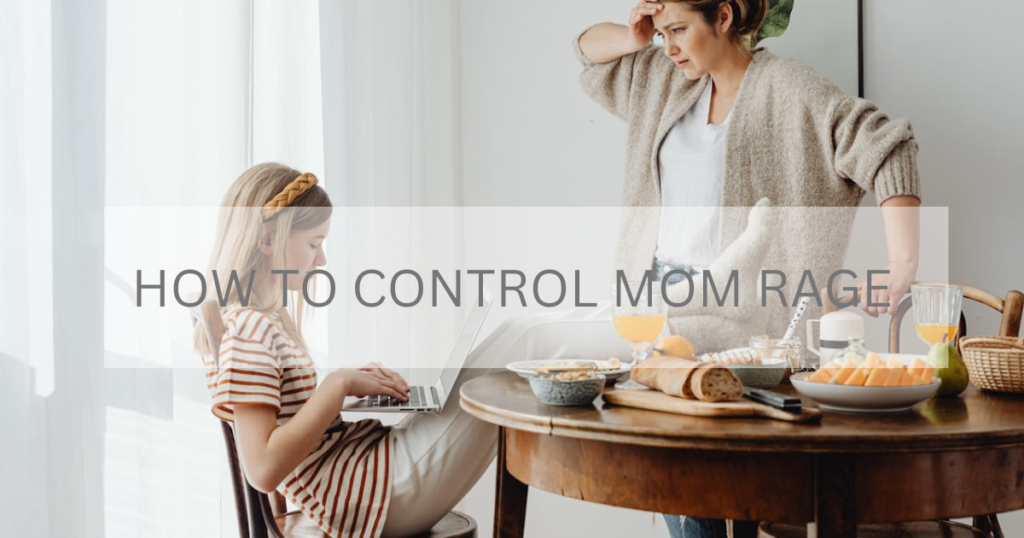
Learn how to control mom rage before you snap

Have you ever searched Google for how to control mom rage?
If you’ve ever been there, I need you to hear this: You are NOT a bad mom. I know, I know, it sounds cliché, but seriously, you’re not a bad mom. The fact that you’re here, reading this, proves it! You’re not a monster. You’re not failing. You’re just completely, utterly overwhelmed.
According to Postpartum Support International, mom rage can be connected to feelings of powerlessness, unfairness, stress, and the overwhelming demands of motherhood.

And honestly? The fact that you’re online reading this post about how to control mom rage is a good sign that you know it’s not healthy. Being willing to change this is already a very good step!
Mom rage is a sign of something much deeper
When you’re supposed to be patient saints while your brain is just begging for a break. When you hit that limit, your brain just flips into fight-or-flight mode. You’re not choosing to be angry. Your brain literally thinks it’s under attack. Once you realize that, you can actually start to fix it. It’s not just you, I promise.
It’s about running on four hours of sleep, carrying the mental load of remembering everyone’s shoe size, the loneliness, and the sensory overload of being touched and needed every single second of the day. It’s what happens when your internal cup isn’t just empty. It’s cracked. Like, totally shattered. Anyone else feel like their cup is basically dust sometimes?
Too much pressure on mom

Because of the way society views moms and women in general, most of us think mom rage means there’s something wrong with us. We tell ourselves we should be more patient, or that other moms have it all together. But those other moms are probably just better at hiding when they cry in the pantry.
It can come from ADHD
For me, the rage usually comes from being totally overloaded. I have ADHD, so executive dysfunction is real, and some days, just hearing a cartoon song on repeat feels like someone is poking me in the ear with a stick. Add in the mental load. The invisible work of planning meals, keeping up with appointments, and tracking laundry. My brain just runs out of space. It’s like all my brain tabs are open and glitching. Anyone else have a brain that feels like a 2002 computer?
The small reasons it builds up

When that happens, even the tiniest thing can push you over the edge. It’s never really about the juice. It’s about the fact that you’ve been “on” for 72 hours straight without a single second of rest. Picture your patience like a bucket. Every little thing that happens adds another drop to it. And let me tell you, that bucket fills up fast. Like, blink-and-it’s-overflowing fast. Tell you, that bucket fills up fast.
- The toddler is screaming because the banana is “too yellow.”
- The partner asks, “Where is the remote?” when it’s right there.
- The guilt about not showering for two days.
- The feeling of your identity being lost somewhere between snack time and laundry. By 5:00 PM, your bucket is full to the brim. The spilled juice? That’s just the drop that makes it all spill over. That’s when the rage hits. It’s never really about the juice. It never is. Trust me. (I’ve been there more times than I can count.)
The Cycle of Shame

The hardest part isn’t actually the anger. It’s the shame that follows. You start thinking, “I’m turning into That shame actually makes it more likely you’ll snap again. Why? Because shame is stressful. Stress fills your bucket even faster. So instead of actually resting, you spend your “off” time beating yourself up. You start the next day with your bucket already half full. It’s a vicious cycle. Been there, done that. Got the t-shirt.l. It’s a vicious cycle. Been there, done that.
What to do in the exact moment you feel the heat.

When the rage starts, it usually feels like a physical wave. Your chest tightens, your jaw clenches, and your voice gets that specific edge. If you can catch it in those first few seconds, you can actually change the outcome.
If your kids are safe, like in a child-proofed room or playpen, just leave. Go to the bathroom. Hide in the pantry. Step outside for thirty seconds. You don’t have to be “present.” I used to feel guilty about leaving the room, but I realized that a mom who takes a two-minute timeout is a thousand times better than a mom who stays and screams. Trust me, your kids will remember the calm, not the two minutes you stepped away. Seriously. Pinky promise.The two minutes you stepped away. Pinky promise.
The “Cold Water” Reset
When my brain is spiraling, I go splash ice-cold water on my face at the sink. Or I grab an ice cube and just hold it. There’s something about that cold shock that snaps your nervous system out of rage mode and brings you back to reality. It’s like a reset button for my brain. Try it next time. It’s weirdly magical. You can show your kids what healthy emotional regulation looks like by explaining what’s going on. Even if they’re toddlers and don’t totally get it, it helps you too. Plus, it takes the pressure off you to pretend you’re fine when you’re not.
Try saying: “Mommy is feeling really frustrated right now because it’s super loud in here. I need to go take a deep breath so I can be kind. I’ll be back in two minutes.”
This does two things: it gives you a way out without drama, and it teaches your child that it’s okay to feel big emotions as long as you handle them safely. Which is huge.
If the noise is what’s driving you crazy, put on noise-canceling headphones or even just earplugs. Some people think it’s wrong to block out your kids, but honestly, Loop earplugs changed my life. They don’t block everything. You can still hear if someone is hurt, but they take the edge off the screaming and keep my bucket from overflowing. Noise-canceling headphones are a total lifesaver if you have sensitive ears. And sometimes?
You don’t catch it in time. Sometimes you just yell. Maybe you said something mean. Maybe you looked way scarier than you meant to. The most important thing to know is that the snap is not the end of the story. The repair is where the real parenting happens. Wait until you are actually calm. Don’t try to apologize while you’re still shaking or while your child is still sobbing. If you try to say sorry while you’re still upset, you might just snap again if they don’t accept it fast enough. Wait. Breathe. Drink some water. Trust me, it helps. (Ask me how I know.)
2. Apologize without excuses
This is the hardest part. We want to say, “I’m sorry I yelled, but you were being so loud!“
Stop right there. The “but” basically cancels out your apology. It tells your child that their behavior prompted your reaction, which can make them feel responsible for your emotions. Instead, just own it. Try: “It wasn’t okay for me to use a loud voice, and it probably felt scary. I was feeling frustrated, but it’s my job to stay calm, and I didn’t. I love you, and I’m sorry.”
3. Do a “Do-Over”
Once you’ve apologized and hugged it out, suggest a do-over. Say, “Okay, instead of both of us crying, how about we both take a breath and try to clean up the juice together?” This shows your kids that mistakes happen, but we fix them.
It turns a scary moment into a lesson on bouncing back and forgiveness. To stop the cycle, we have to figure out what’s actually filling your bucket. For some of us, it’s the sound of chewing. For others, it’s the feeling of sticky hands on our clothes. I spent a week keeping a “Rage Log” in my phone. Every time I felt that heat rising, I wrote down what was going on. Spoiler alert: My worst moments always happened between 4:00 and 6:00 PM. The Witching Hour.
- I felt it most when I was trying to do a chore while the kids were talking to me.
- I was significantly more reactive on days when I hadn’t drunk enough water. Once I saw the patterns, I could start making little micro-adjustments. For me, it was usually being touched too much, being hungry, or not getting enough sleep. The basics, right? (Why are the basics always the hardest?)
- Environmental: Loud TVs, cluttered counters, bright lights.
- Emotional: Feeling unsupported by a partner, guilt about work, feeling “trapped” in the house.
- Mental: Trying to multitask too many things at once.
If you know 5:00 PM is your danger zone, change up the routine. Maybe that’s when you put on a podcast for the kids and hand them a quiet activity like coloring or play-dough, just so you can have ten minutes of mental silence. Or stop trying to cook a real dinner at 5:00 and switch to something low-effort. Lower the bar. Seriously, the bar is probably way too high anyway. (I’m talking Olympic pole-vault high.)
THIS POST WAS ALL ABOUT 10 SIMPLE WAYS ABOUT: HOW TO CONTROL MOM RAGE ?
-SARAH